Publication + Learning Experience + Video
Kansas Health Institute
AIPolicy
Responsible. Adaptable. Built to be used.
- 01Data privacy
- 02Bias mitigation
- 03Human oversight
- 04Transparency
- 05Community engagement
- 06Training + capacity
More than a report
Make an emerging issue feel usable now.
Public-health organizations needed more than warnings about artificial intelligence. They needed a clear framework for developing policy—one that could hold research, sample provisions, ethical questions and practical guidance without overwhelming the people expected to use it.
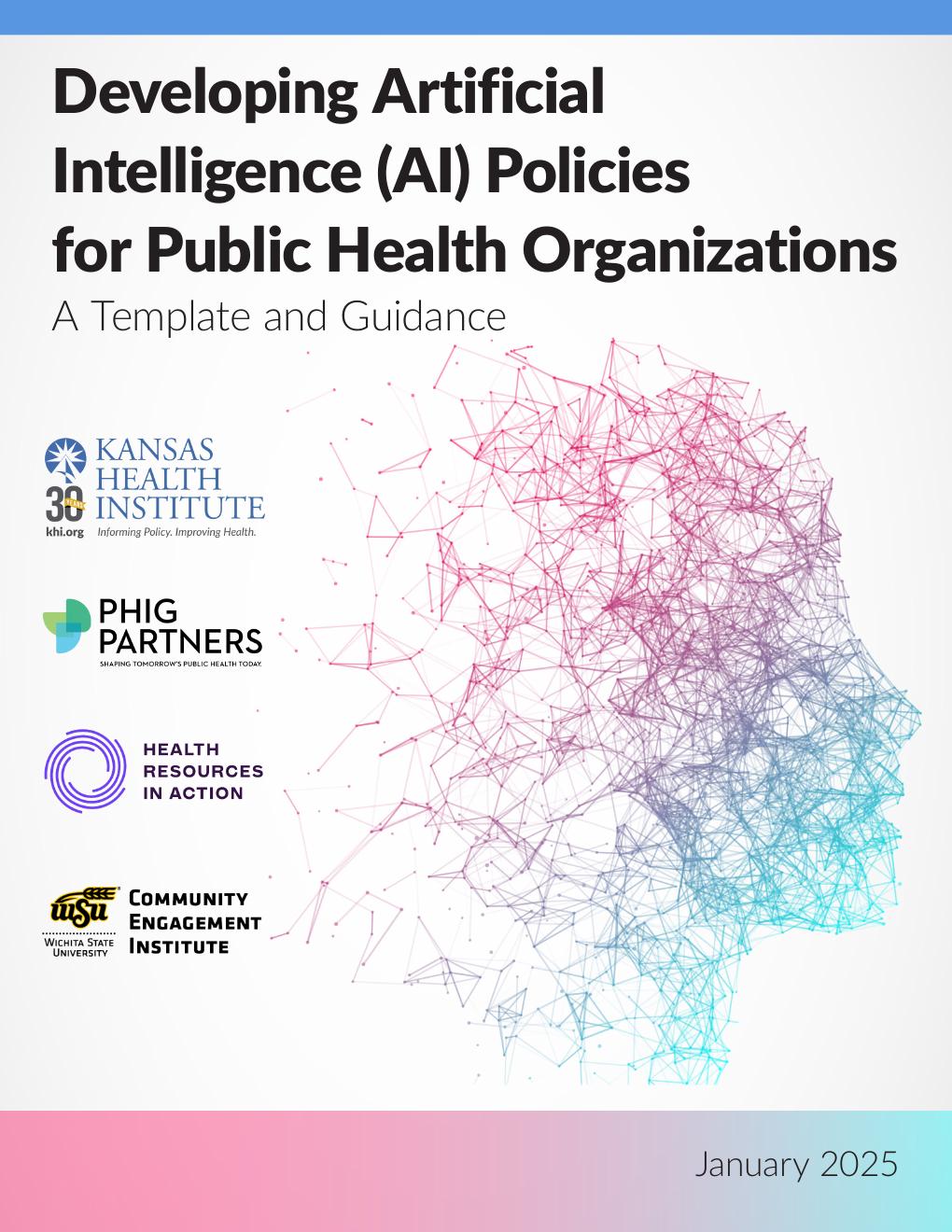
The starting point
Seventy-six pages.
One adaptable framework.
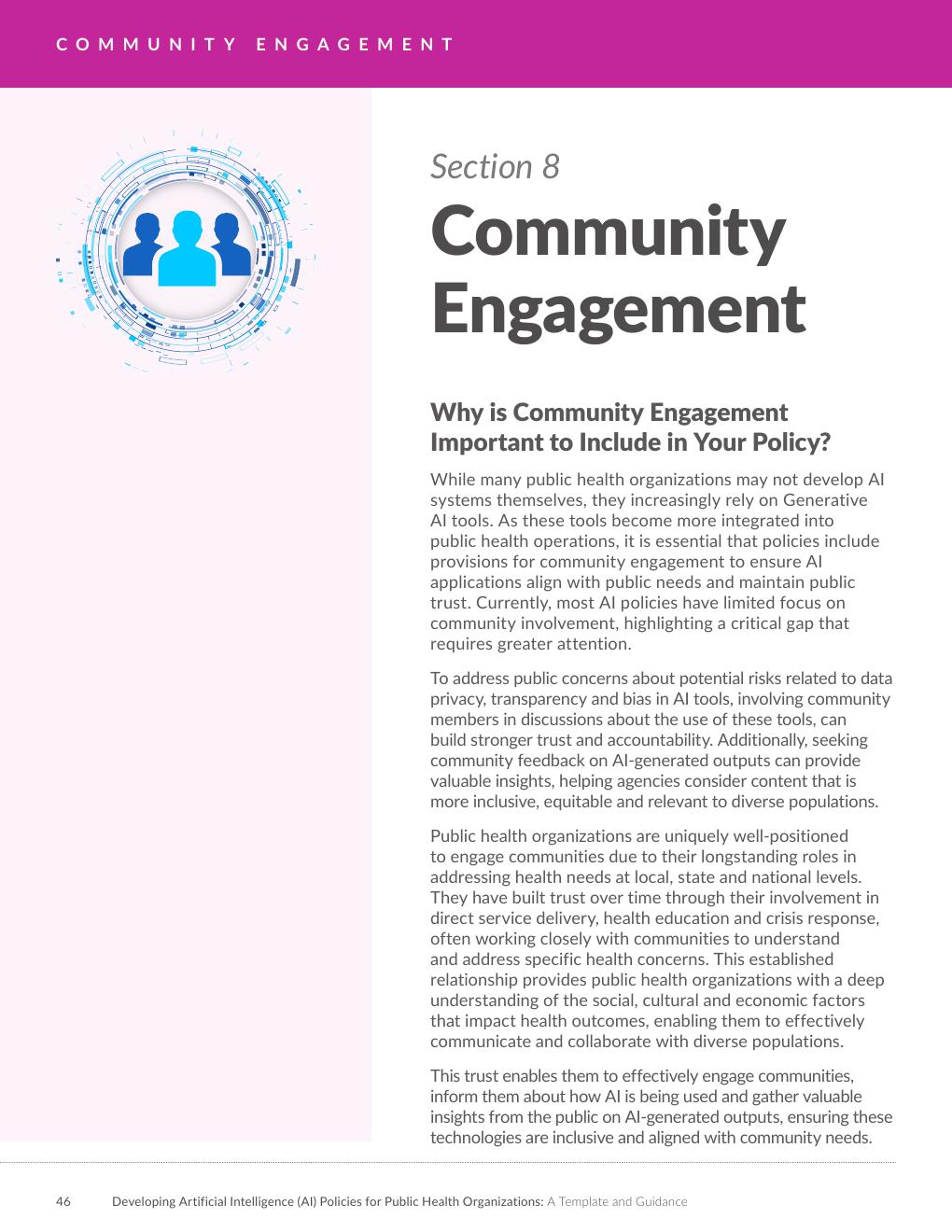
The Template and Guidance translates a fast-moving policy challenge into a structured working document. Six core policy areas use distinct colors, repeated icons and consistent page architecture to help readers move between context, sample language and self-reflection.
76pages
6policy areas
14expert reviewers
The resource, introduced
Tatiana Lin / Kansas Health Institute
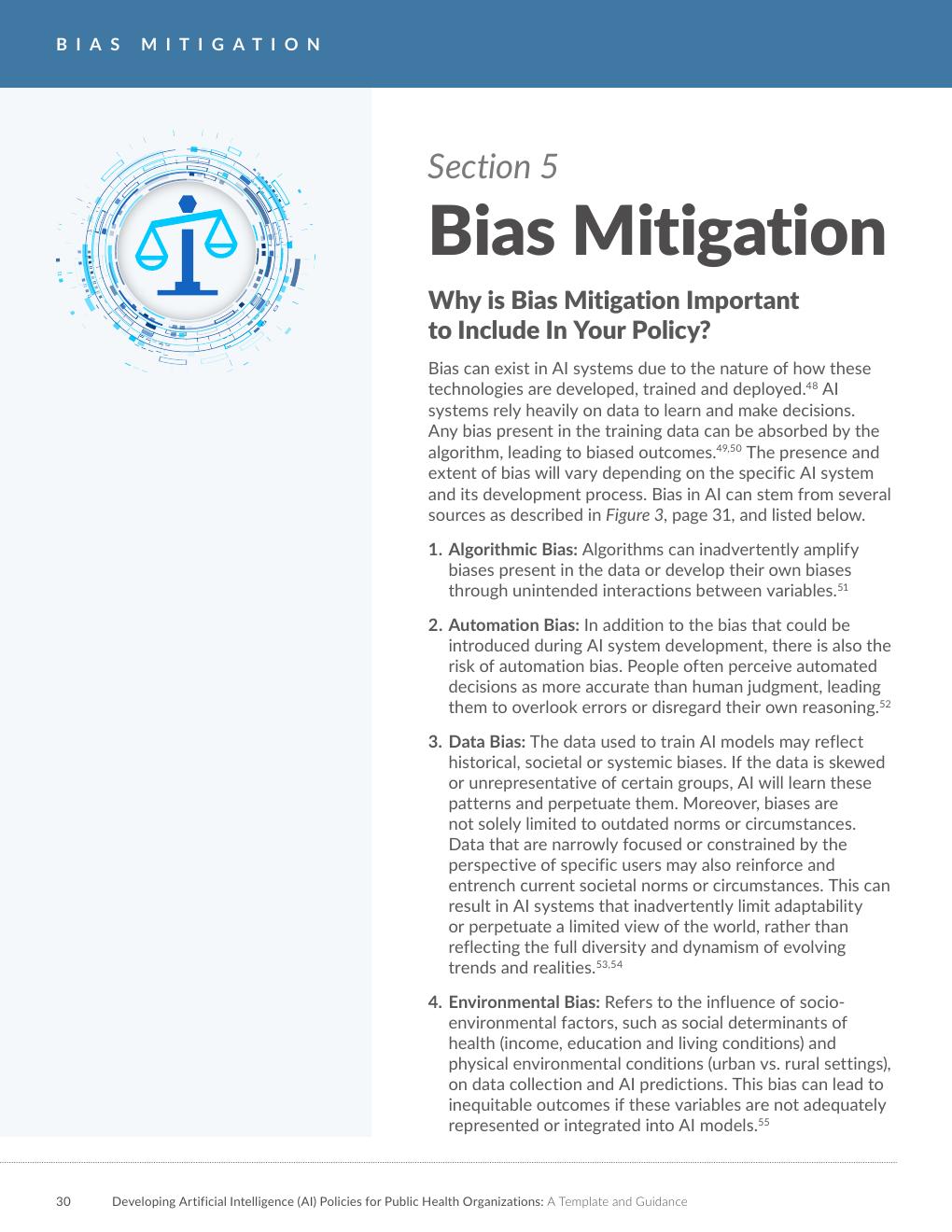
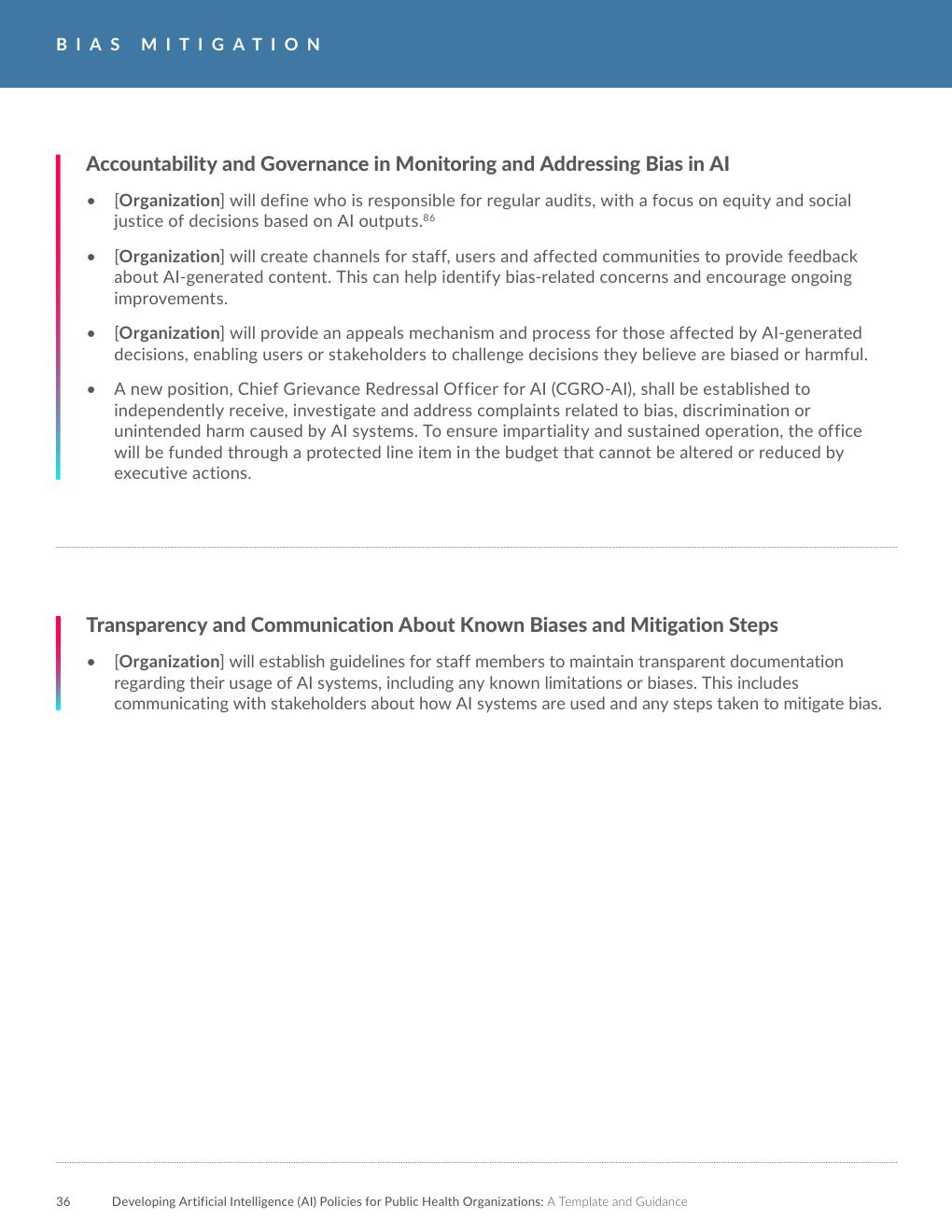
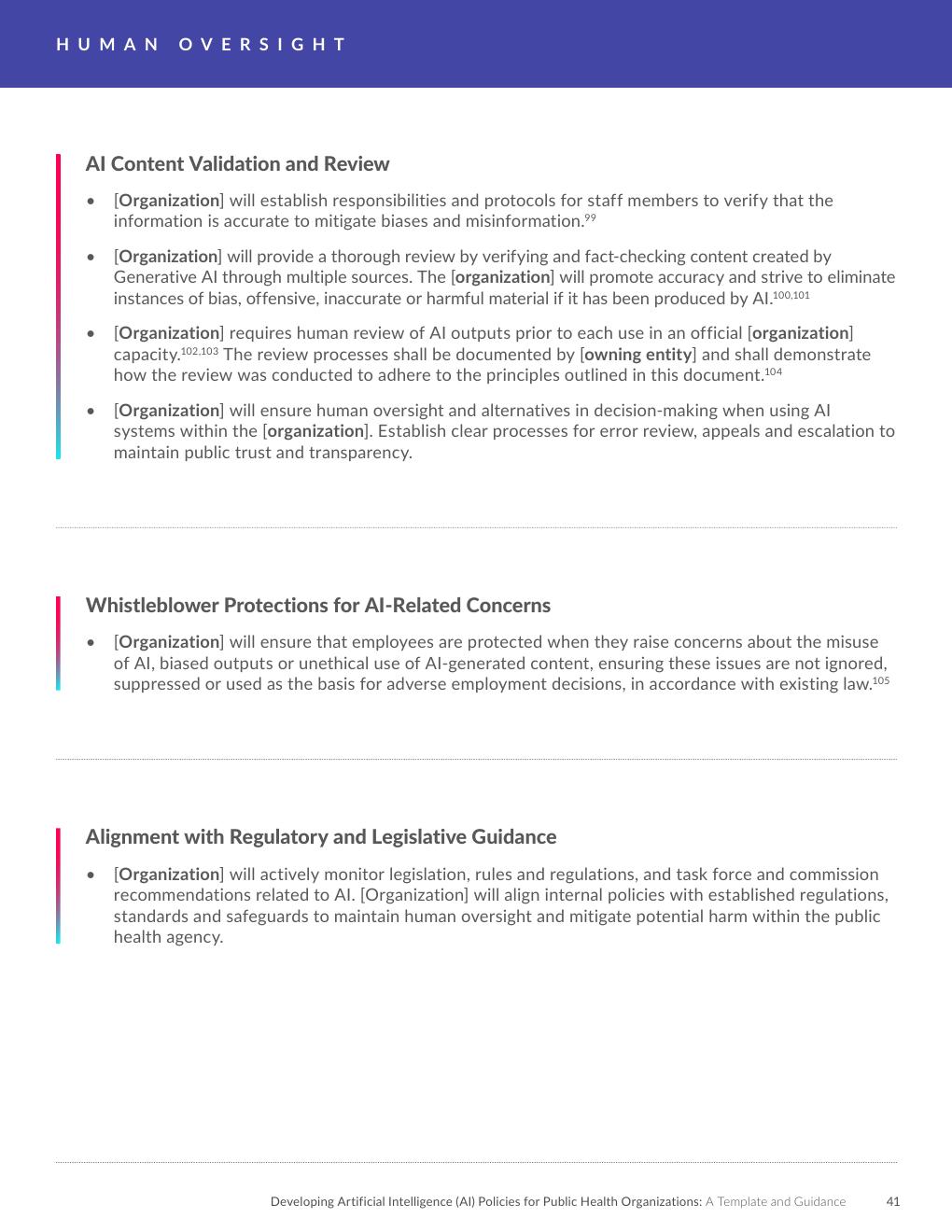
One system / six policy areas
Color makes the structure visible.
The recurring head graphic creates recognition. Inside, color and icon families orient the reader across data privacy, bias mitigation, human oversight, transparency, community engagement and training.
From reading to doing
The guidance becomes a working session.
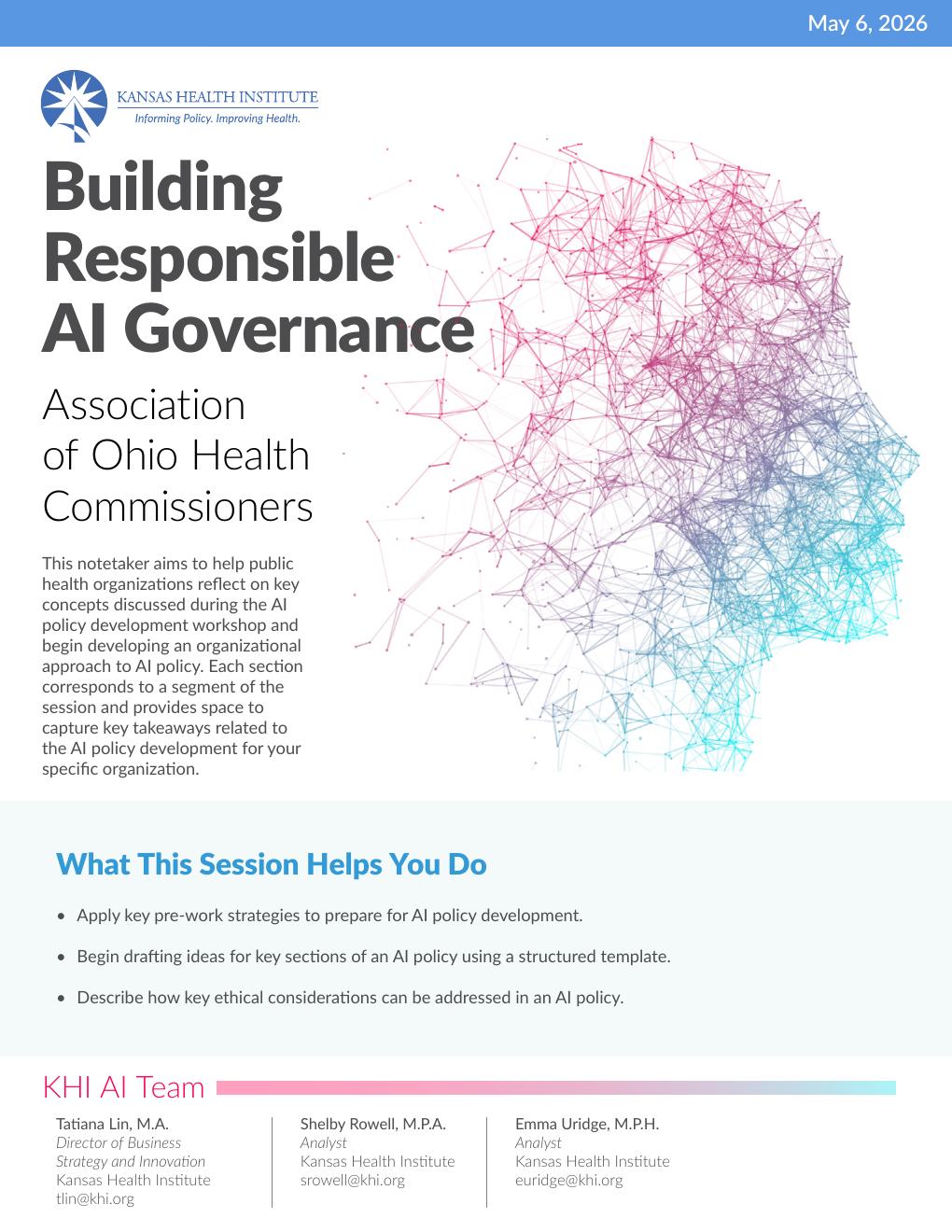
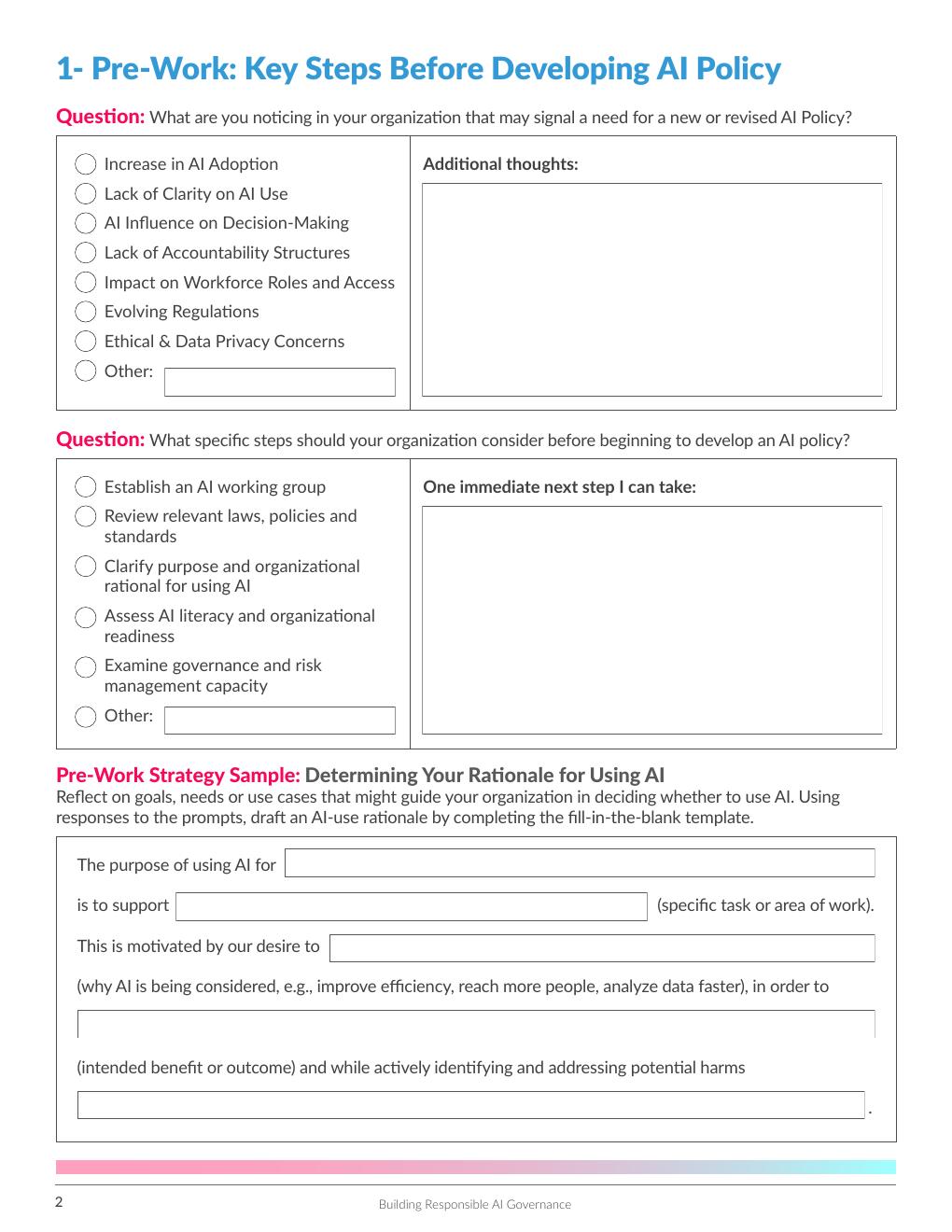
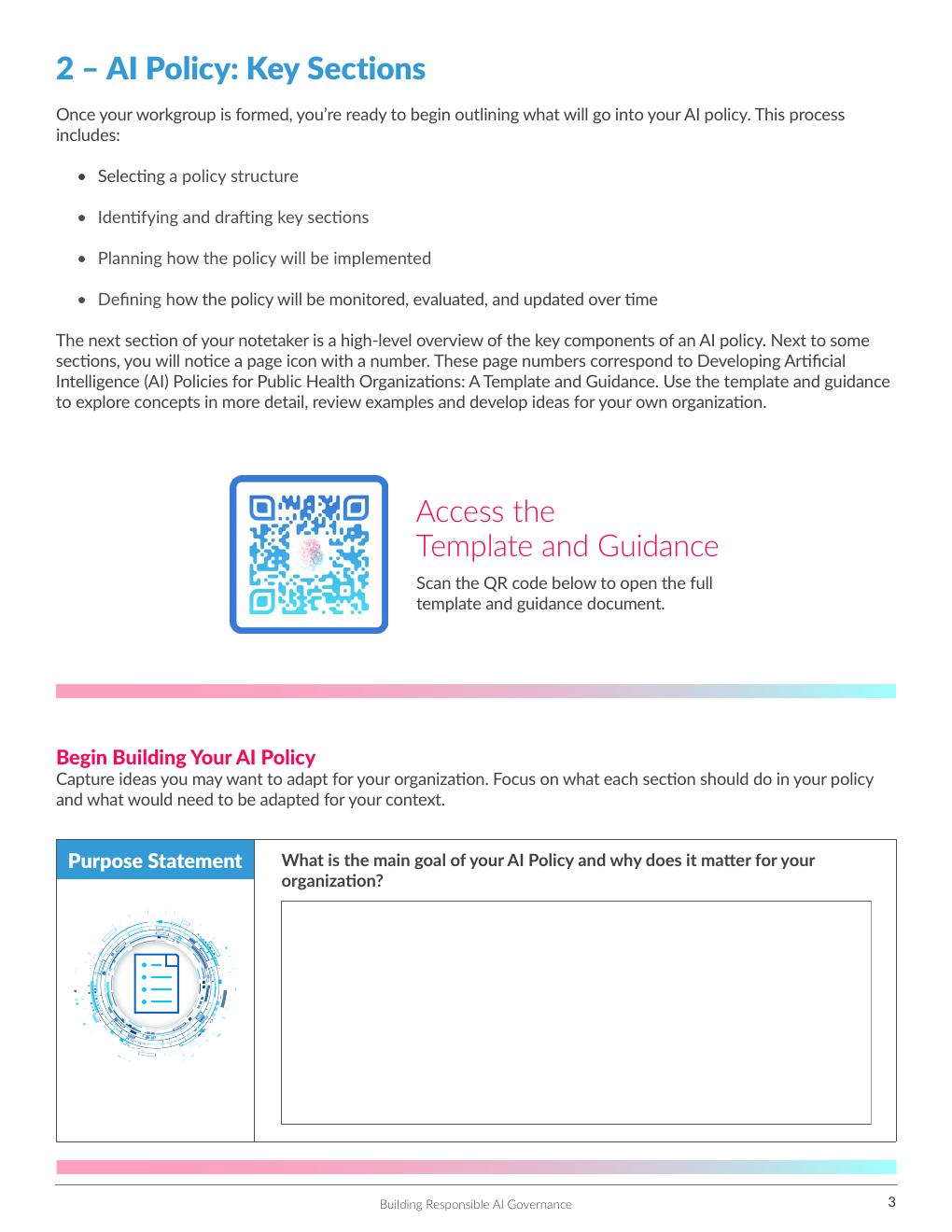
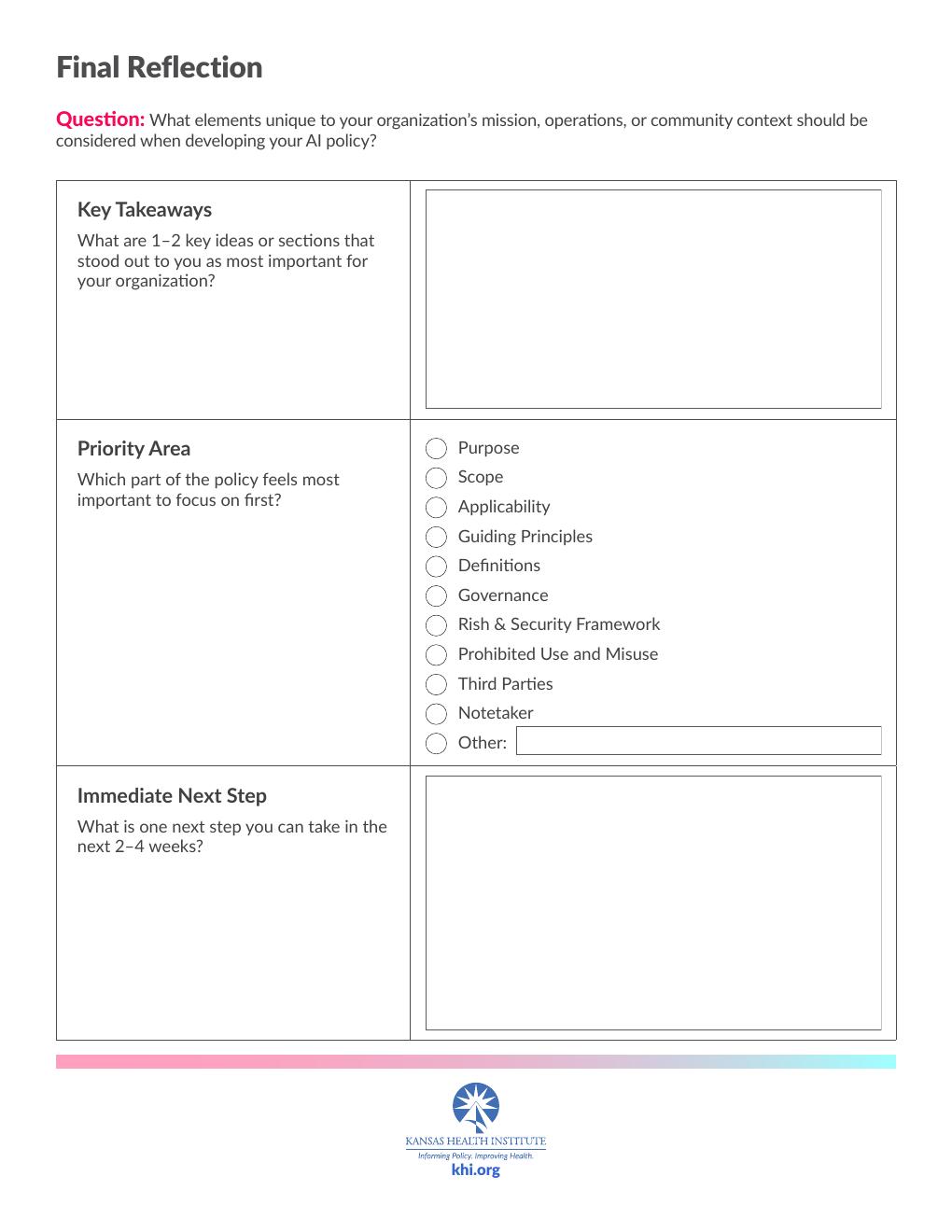
An eight-page interactive notetaker adapts the system for the Association of Ohio Health Commissioners. Participants assess readiness, work through policy sections and leave with priorities and next steps—not simply a stack of presentation notes.
The system expands / 2026
From public health to hospital governance.
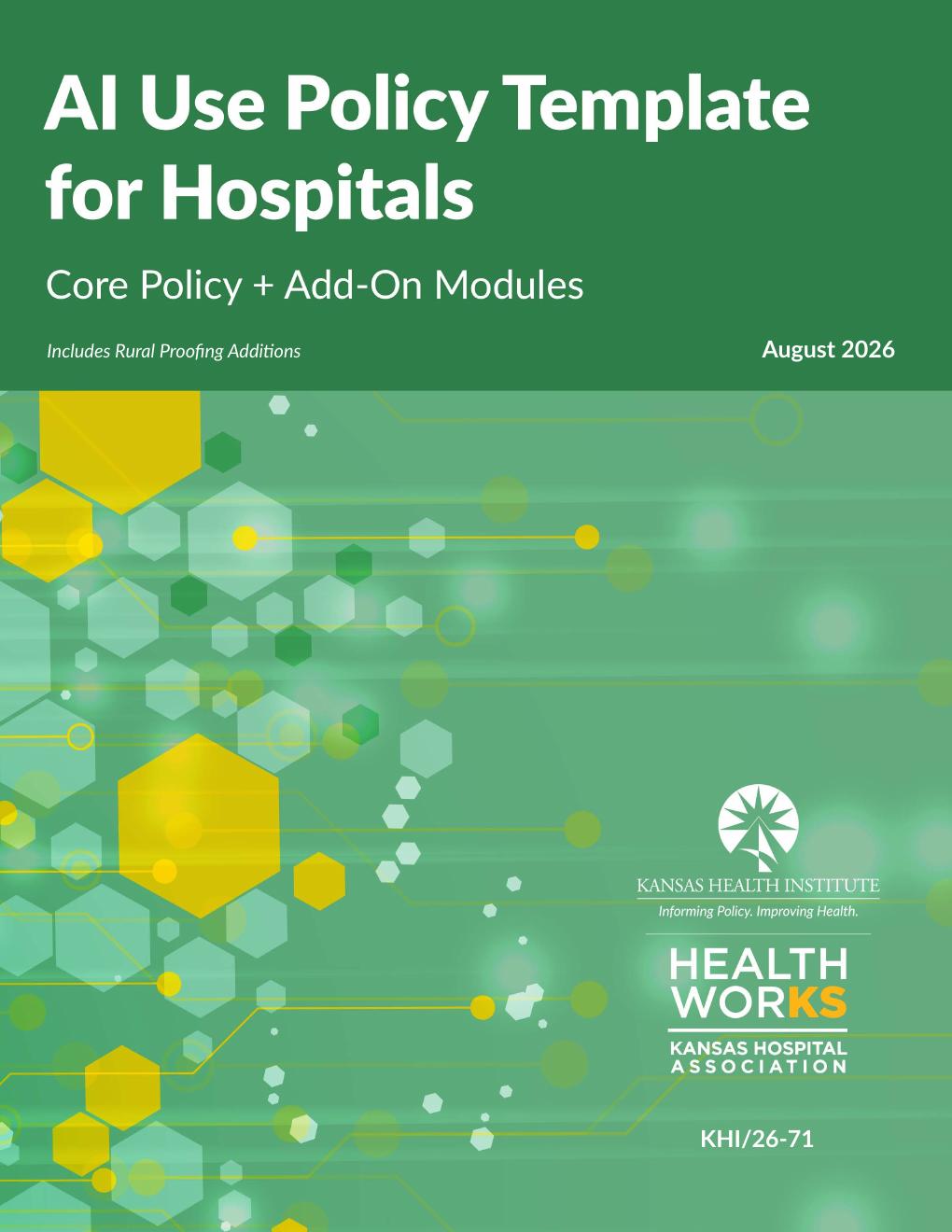
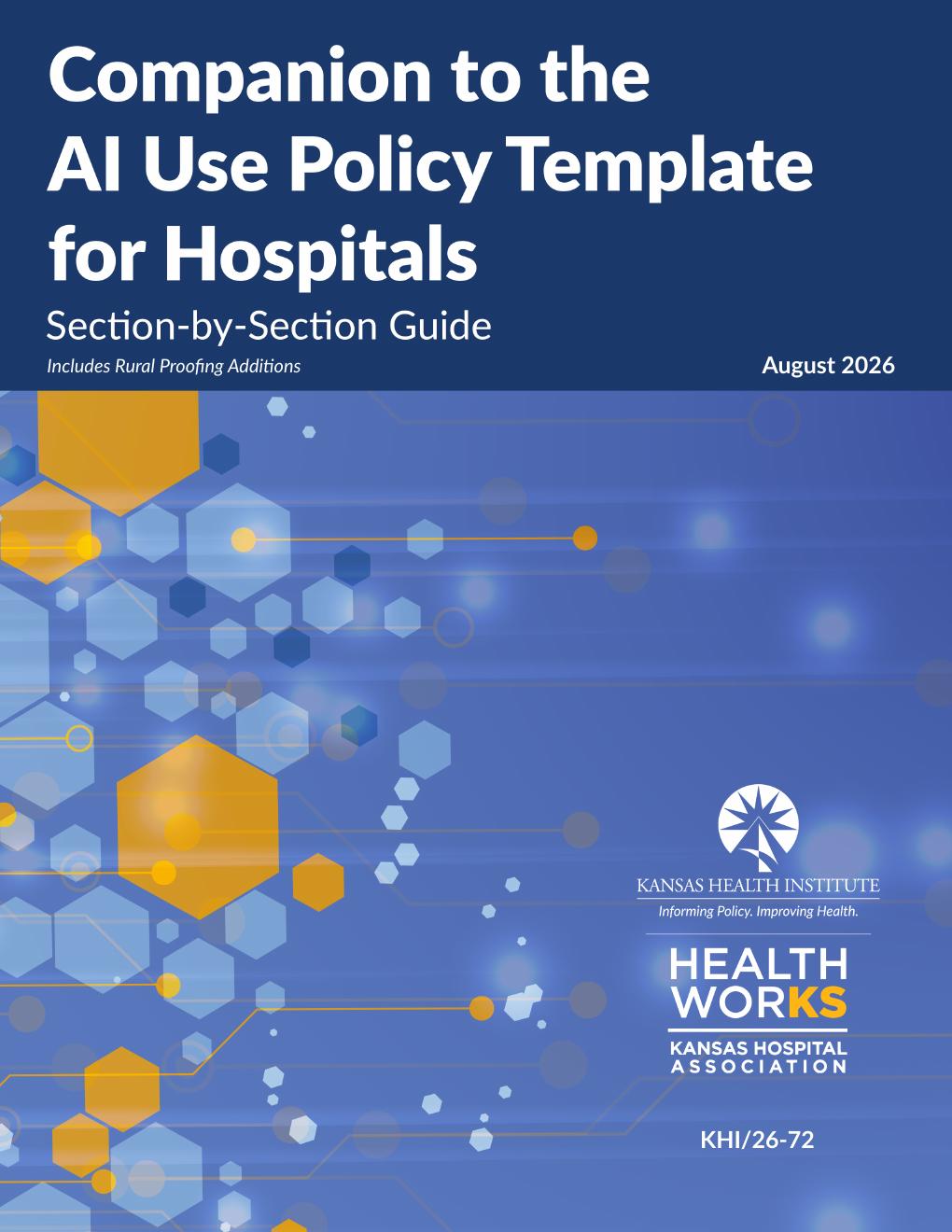
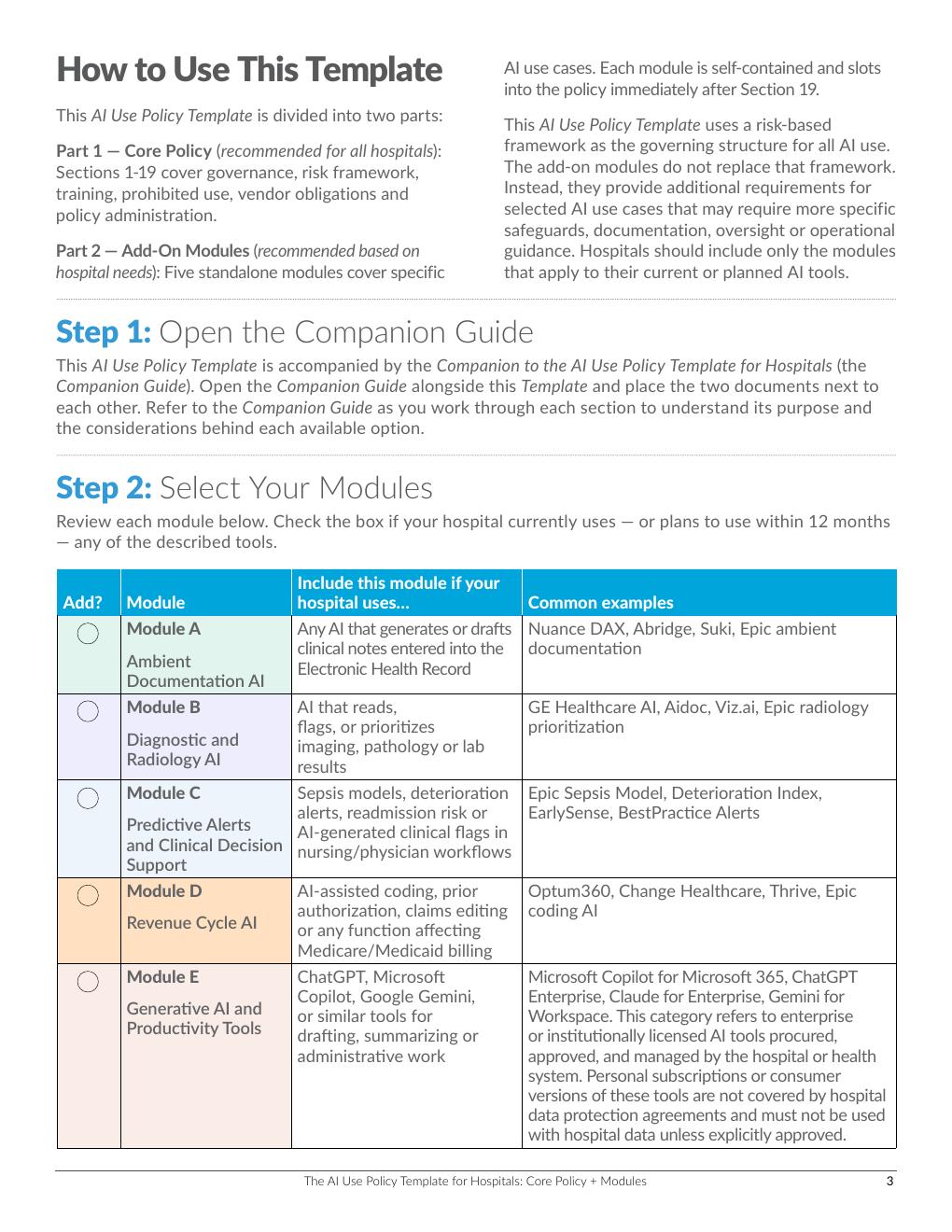
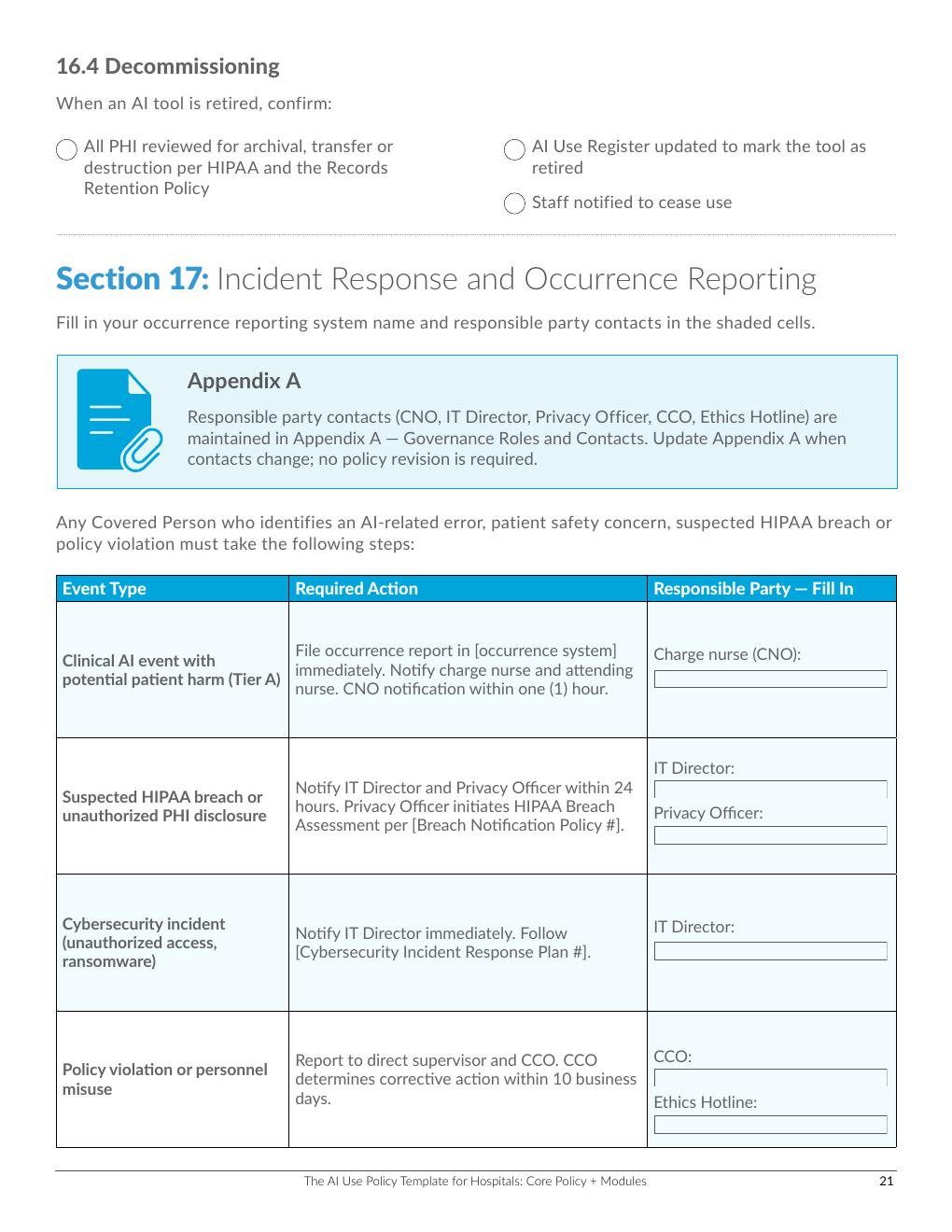
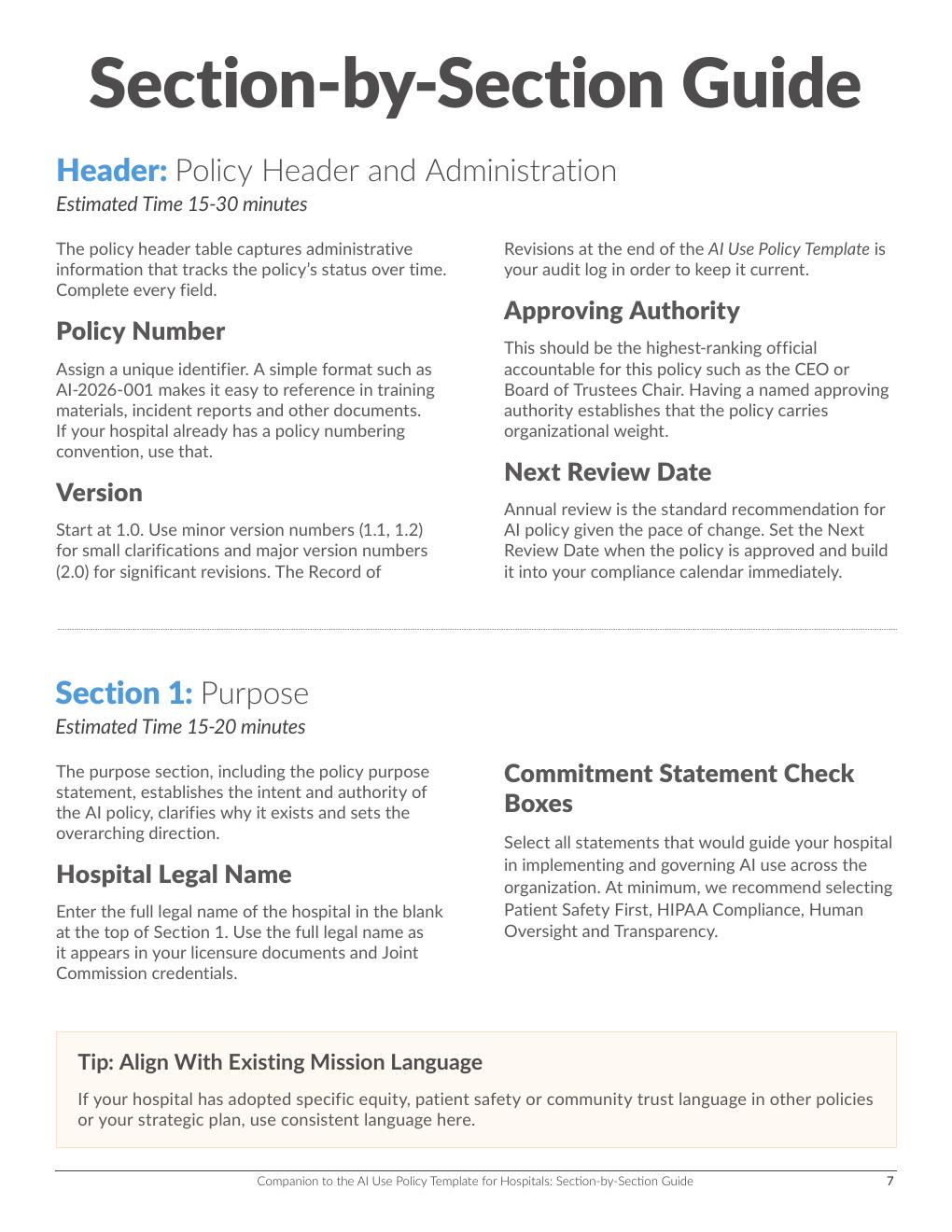
The next generation translates responsible-AI policy into a modular hospital toolkit: a 41-page customizable template paired with a 36-page section-by-section companion. The new honeycomb identity distinguishes the audience while preserving the system’s clarity and practical purpose.
The work travels
Guidance built in Kansas.
Used far beyond it.
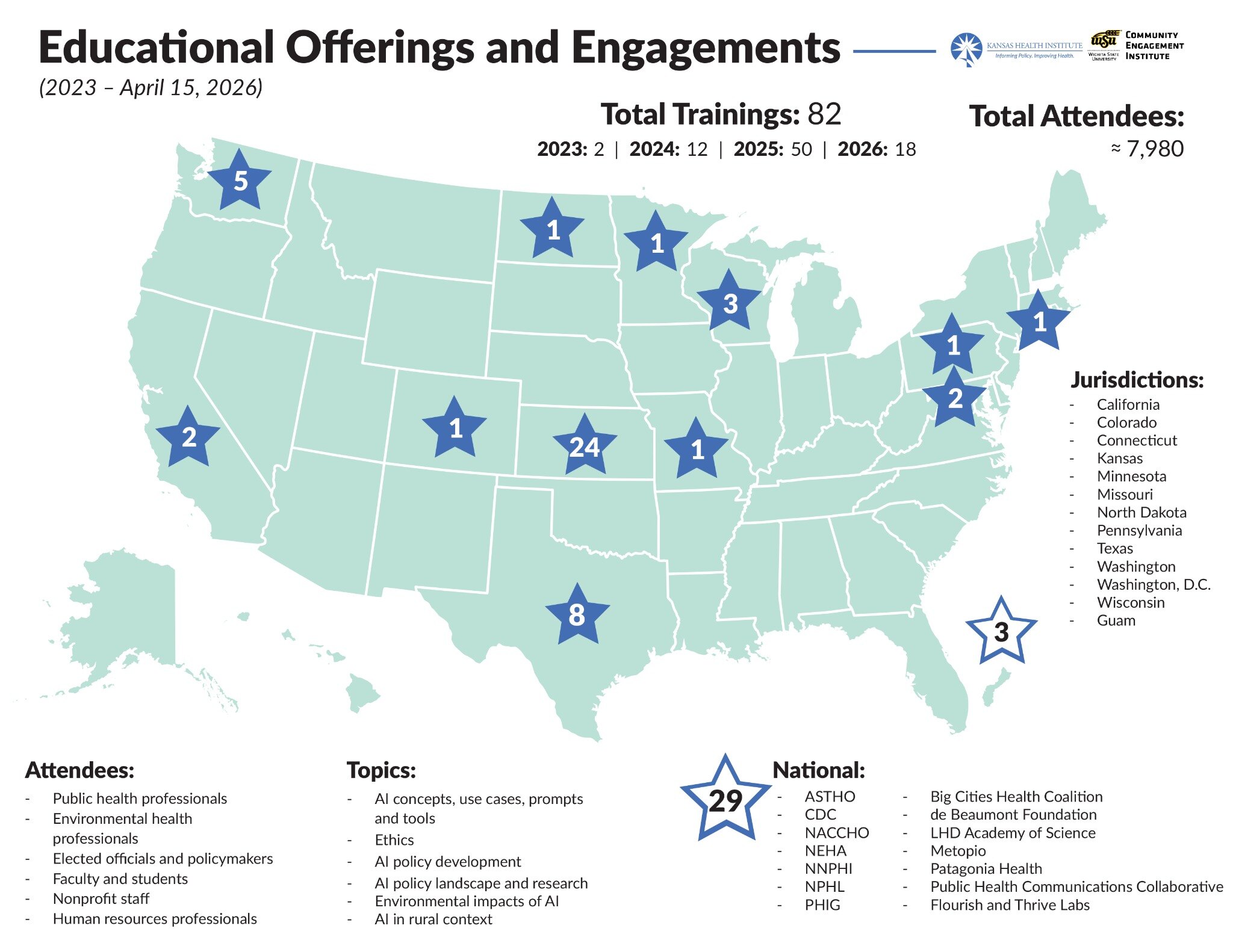
By April 15, 2026, the broader AI educational program had reached nearly 8,000 attendees through in-person and virtual offerings spanning 13 jurisdictions and a growing roster of national organizations.
82trainings
≈7,980attendees
13jurisdictions
A related editorial system
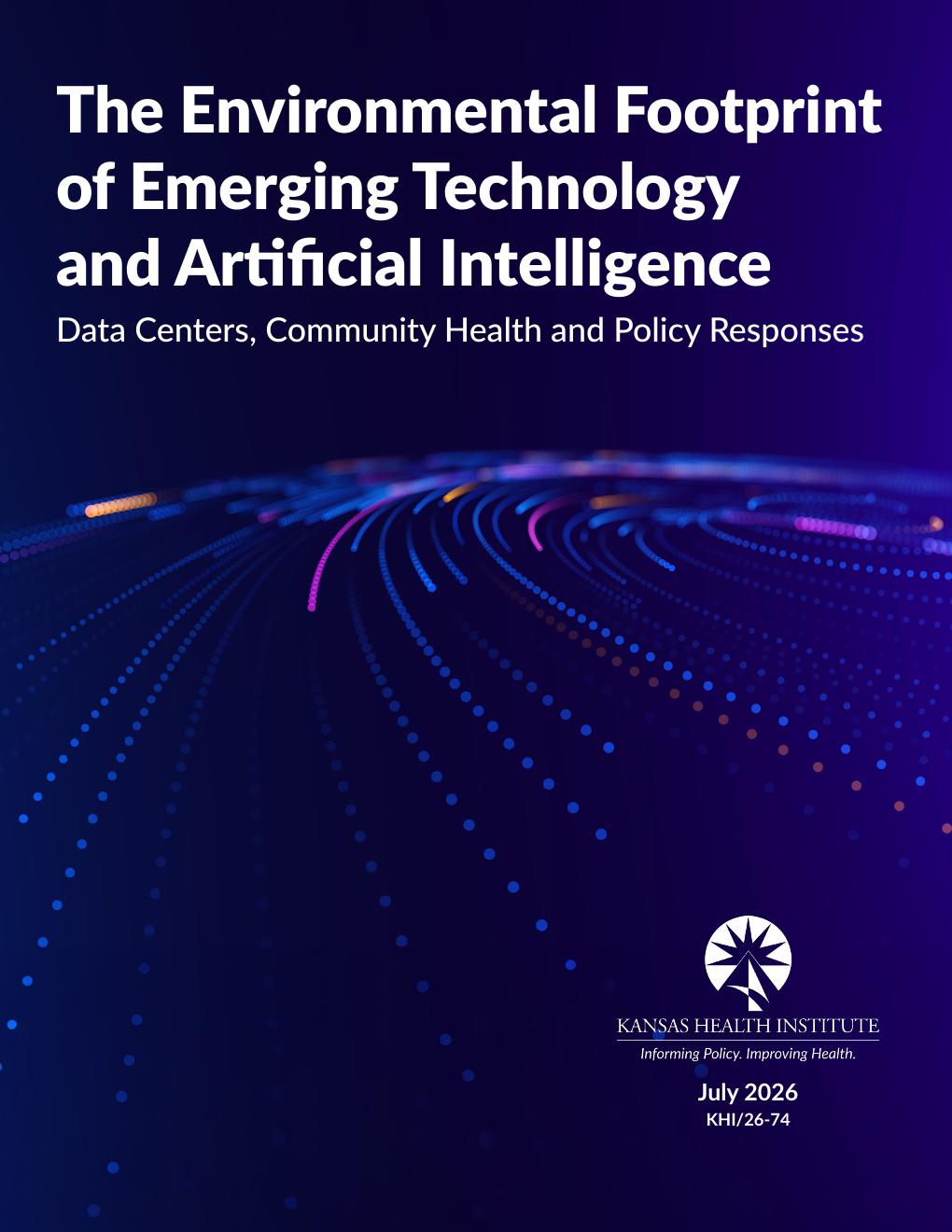
AI’s environmental footprint gets its own visual argument.
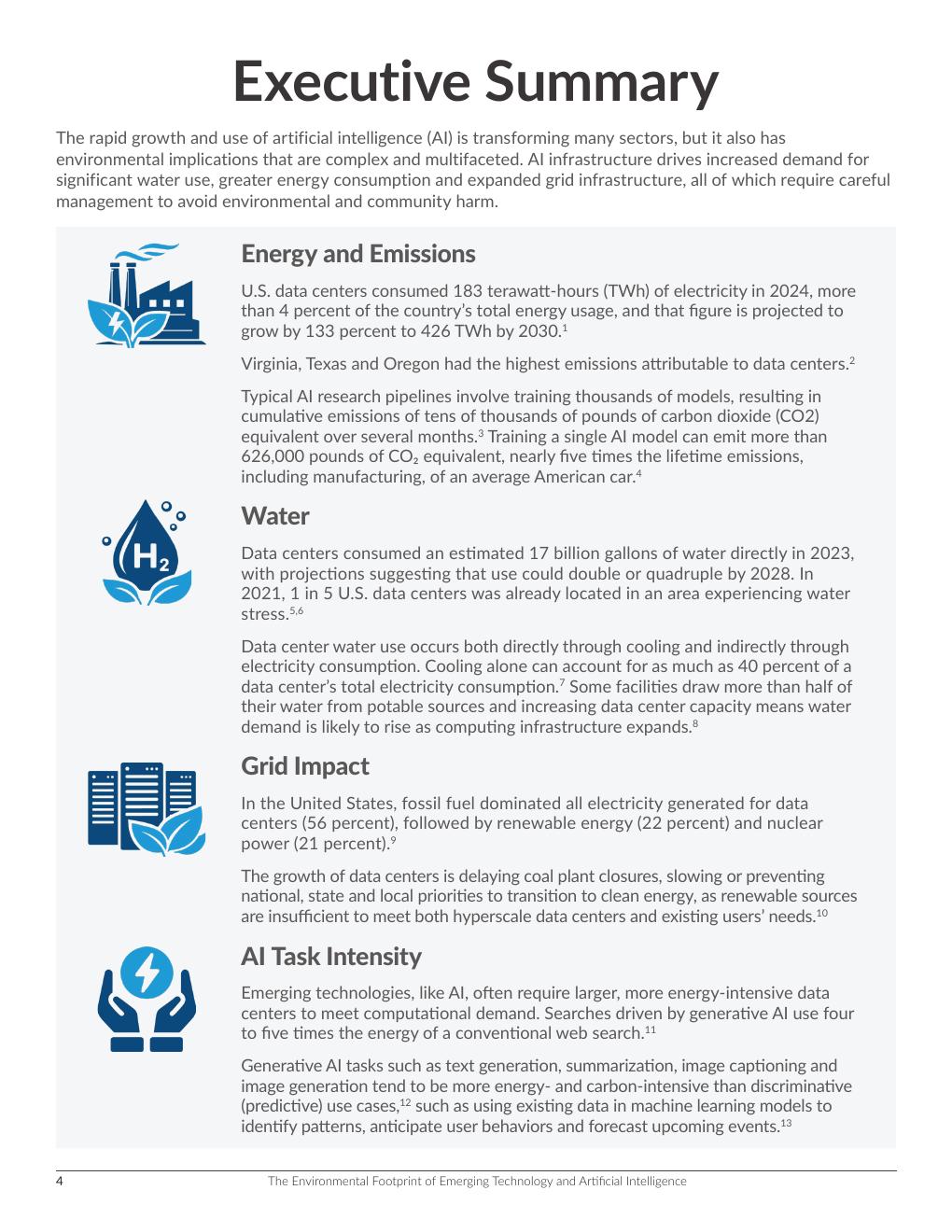
A separate 20-page report examines data centers, energy demand, water use and policy responses. Its dark, luminous visual language deliberately steps away from the policy-template identity while keeping dense research approachable.
The result
A resource becomes
a growing platform.
Most viewedKHI webpage / 2025 + 2026
Multi-formatguidance + workshops + video
National reachtraining + organizational use